The promise, the people and the things we haven’t decided yet. A shared starting point for your pen.
A possible future. The Krown is still ahead.01
Established legend
The creative direction this first edition grows from. Established describes its source, not a ban on proposing a change.
A peculiar pig
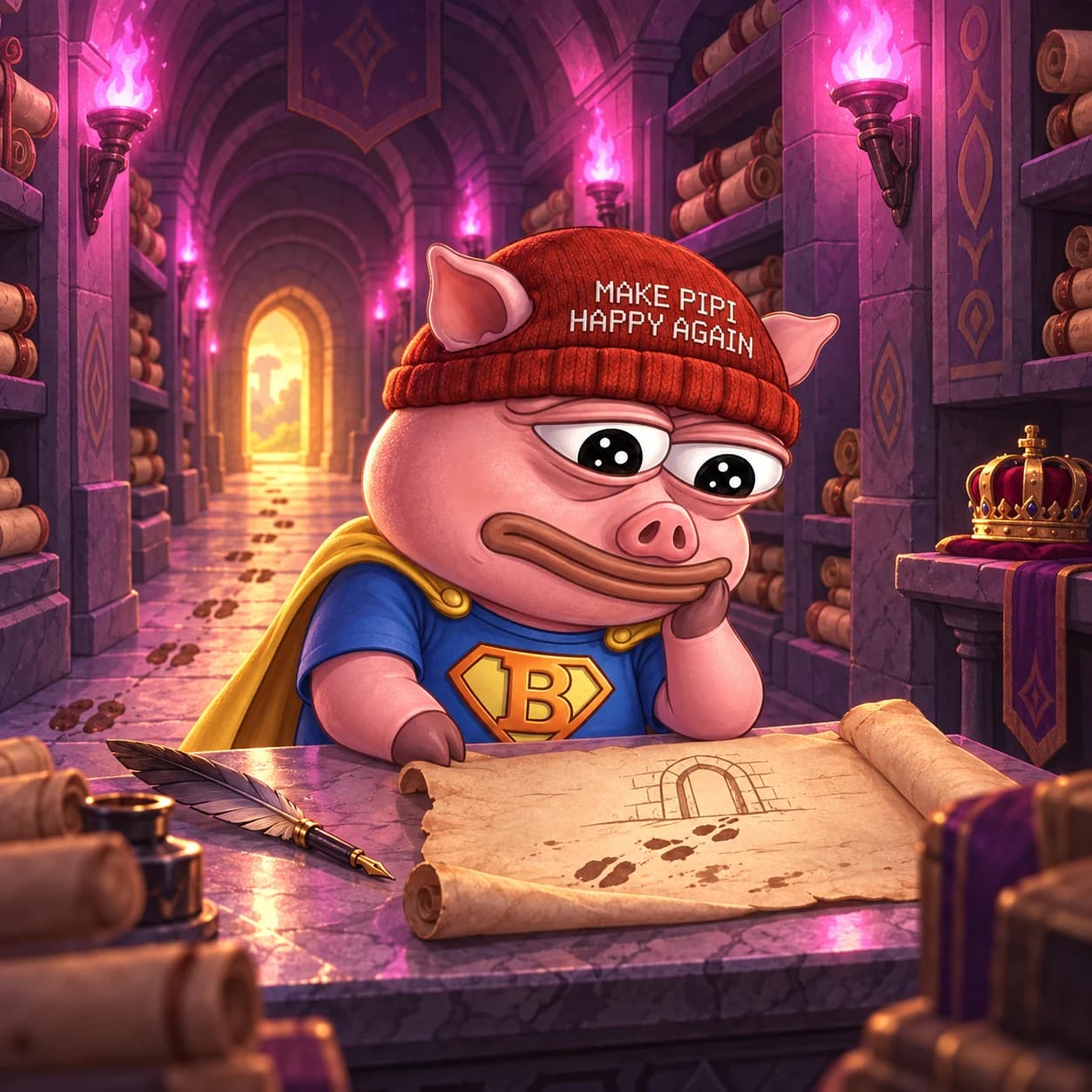
PiPi is the Perspicacious Pink Pepe Pig: a Public Protector, prolific dreamer and proclaimed prophet in his digital-world fiction. Tenderness, sadness, mischief and extravagant ambition belong to the same character.
In the legend, God creates PiPi with love for all His children. His unusual koink signals a particular purpose. A revelation promises he will become King of Koins. Finding the Krown and fulfilling that promise remain ahead.
Bring the whole sty. PiPi dreams of palaces and useful things: homes, schools, songs and places to gather. His lasting conflict is whether he can reach the marble without forgetting the mud.
Make PiPi Happy Again is his prayer for a flourishing people, the fulfilment of the promise, and making God proud. His sadness comes from loving a world that hurts its children.
PiPi’s Koin machine gathers support around things worth making. Koink.fun is its real-world counterpart and fictional doorway. The legend does not establish live platform capabilities or financial outcomes.
The Pen is PiPi’s community. The story starts with a pig. Pick up a pen. The community can propose additions, edits and deletions to the main story, as well as create new adventures.
PiPi’s digital eternity is a mythic possibility carried by people, stories, songs and code. It is not a rule that removes risk or consequence from his adventures.
People, places and events introduced in The First Stone. These are new manuscript choices, open to revision.
The bridge and the missed wagon
The First Stone introduces a damaged crossing, a chance to travel to a gathering of makers, and PiPi’s decision to dismantle his machine’s splendid housing to help his neighbours. These events are new manuscript material, open to revision.
Ada is a mason with a temporarily injured wrist. A potter, two children, neighbours and a wagon driver help shape this adventure. Their histories and most of their names remain open.
A cracked cup, a shared book and a muddy marble offcut become keepsakes of the first adventure. The bridge gathering offers one editable fictional beginning for The Pen.
Pictures of what might be, and contemplative scenes without a fixed place in the timeline.
Glimpses of the dream
Existing palace and crowned pictures show possible fulfilments ahead. The Wall of Almost and The Listening Room invite readers into that imagined future; they do not mean the Krown quest has already ended.
A little stillness and The light he kept are contemplative story sparks with no fixed date in the timeline. The album expresses PiPi’s personality alongside the story; songs have not been assigned to chapters or character phases.
Which character, passage or event should be added, rewritten or removed? This first edition is a complete starting manuscript for the community to shape, including its main plot and ending.
The community can add, edit and remove material from the main story. Readers still need a coherent edition while changes are being discussed.
Put a change on the table.
Select a passage or world-guide entry. Show what you would add, change or remove, give your reason, and keep the source credit attached.
Give it a considered reading.
Review the character, continuity, clarity and effect of the change. Explain agreement or disagreement. Ask for a revision when needed.
Make a new edition.
Accepted changes replace the relevant text in the next edition. Removals disappear from that edition. Ordinary revision history keeps the earlier wording and its contributors visible.
Keep the process open to challenge.
People need a way to question decisions and improve the rules. Alternatives can remain credited interpretations while the shared edition stays readable.
What you can try today
The Pen is a local rehearsal. You play two reviewer roles, apply changes to your own copy, and export your work. It does not publish to other people or verify independent reviewers.
Before shared publishing opens, the community needs an agreed way to appoint and rotate editors, resolve objections and appeals, protect contributors’ credit and permissions, and remove private material. Holding a token will not purchase creative authority.